Industrial motherboard lifecycle planning means choosing a board whose processor sits in a published longevity programme, freezing its bill of materials, and agreeing how changes and end of life are announced. Done well, a machine can be built and repaired for ten years or more without an unplanned redesign when a chip or connector disappears.
This guide is written by the engineering team of Beijing Huamei Xuntong Technology Co., Ltd. (TouchVision), a manufacturer founded in 2012 that designs and builds industrial displays, embedded boards, HMI panels, industrial gateways and edge AI computers.
Key takeaways
- The industrial motherboard lifecycle often costs or saves more than raw performance in long-running machines.
- Processor longevity programmes set the ceiling: NXP lists the i.MX 8M family to January 2033, and ST offers 7 to 20 year commitments.
- Put BOM freeze, PCN notice, EOL notice with a last-time buy and a successor plan into the supply agreement.
- A board is only as long-lived as its shortest-lived critical part, so qualify alternates for memory and power ICs.
- Custom carrier boards around a proven core let a supplier absorb part changes without a redesign on your side.
Why does the industrial motherboard lifecycle matter more than raw performance?
For machines that are built, sold and serviced over many years, the industrial motherboard lifecycle decides total cost more than benchmark speed, because a forced board change means new software validation, new certification tests and sometimes a new enclosure. A kiosk, charger or control cabinet might be designed in one year, produced for five to seven and supported in the field for another five. A consumer board can change or disappear within a year or two; an industrial board is chosen precisely because its supplier promises to keep it orderable and unchanged for a long time.
Japanese and German industrial PC makers describe the same four priorities in slightly different words: long-term stable supply, reliability for continuous operation, tolerance of temperature, humidity and vibration, and room for customisation. German integrators add a practical warning: long-term availability lowers the risk of an unplanned stop but does not remove it, so critical systems still need spares or redundancy.
How do processor longevity programmes work?
Most industrial processors are listed in a vendor longevity programme that names a minimum supply period counted from launch, and that period is the ceiling for any board built around the chip. Three vendors used on common ARM industrial boards show how this looks in practice:
- NXP: its product longevity programme commits listed parts to 10 or 15 years from launch. The i.MX 8M family, launched in January 2018, is listed with 15 years, to January 2033; i.MX 8M Mini runs to February 2034 and i.MX 8M Plus to March 2036. NXP notes that parts are not discontinued automatically when the period ends, and that its end-of-life and change notification policies still apply.
- STMicroelectronics: listed products carry a 7, 10, 15 or 20 year commitment, which already includes the end-of-life notification period, and changes are notified through ST’s PCN process.
- Texas Instruments: the Sitara AM3354, a Cortex-A8 processor with 3D graphics and CAN, is still shown as an active part on TI’s product page, many years after its introduction.
Check the exact part number, not just the family, and remember that memory, eMMC, power ICs and connectors have their own lifecycles. A board is only as long-lived as its shortest-lived critical component, which is why board makers keep approved alternates for passive parts and qualify second sources early.
What should the board supplier commit to in writing?
Ask the supplier to put four commitments into the supply agreement: a fixed bill of materials, advance notice of any change, an end-of-life notice with a final order window, and a named successor.
| Commitment | What to ask for | Why it matters |
|---|---|---|
| BOM freeze | Locked components, PCB revision and firmware for the agreed period | Your software image and test results stay valid |
| Product change notice (PCN) | Written notice before any component, layout or firmware change, with samples of the new revision | Time to re-test before the change reaches production |
| End of life (EOL) notice | Advance warning and a last-time-buy window | Lets you buy for remaining production and spares |
| Successor | A replacement that keeps size, mounting holes and connectors where possible | Shortens requalification when the change comes |
| Traceability | Serial numbers linked to board revision and firmware version | Faster field service and failure analysis |
NXP’s own wording is useful here: when a part is withdrawn, a migration to a form-fit-function compatible device may be required. A board supplier that designs its own OEM carrier board can often absorb such a change behind the same connectors, so the machine maker sees only a revision letter rather than a redesign.
How do you size a last-time buy?
Size a last-time buy from the remaining production forecast plus the spares you need for the service period, then add a margin for field failures and for repairs that consume more than one board. A simple method is to multiply the installed base by the expected annual failure or replacement rate and by the years of support left, add the units still to be built, and review the figure with your service team. Store the boards in their original moisture-barrier packaging and record the date code, because long storage has its own risks for batteries and some components.
Which TouchVision boards fit long-life designs?
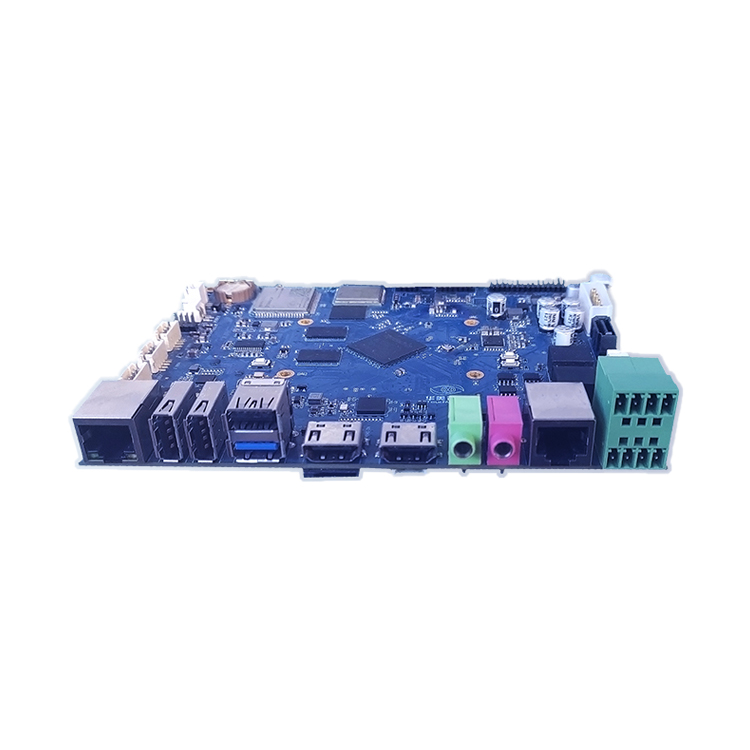
TouchVision designs and builds its ARM industrial boards in-house and offers change notification and long-term availability for mass-production projects; the processor family is the first thing to match to your planned production period.
| Board | Processor | Key interfaces | Typical role |
|---|---|---|---|
| TV-AM3354 | TI Sitara AM3354, Cortex-A8 | LVDS/RGB, 5× RS-485, RS-232, 10/100 Ethernet, 4× USB, watchdog | EV chargers, fuel dispensers, bank inquiry terminals |
| TV-i.MX8M | NXP i.MX 8M, quad Cortex-A53 + Cortex-M4 | Dual LVDS, 4K HDMI, 4× USB, Ethernet, hardware encryption | Fire-safety panels and HMIs that need a longevity listing |
| TV-RK3568 | Rockchip RK3568, quad Cortex-A55 | Dual LVDS, 2× 4K HDMI, eDP, 5× RS-485, CAN, GbE, Wi-Fi + BT 5.0 | Kiosks and HMIs with richer graphics |
| TV-NUC972 | ARM9, 300 MHz | 2× RS-485, 2× CAN, 3× USB, Ethernet, AES/SHA/3DES | Compact 8-inch HMIs |
| TV-RK3308 | Rockchip RK3308, quad Cortex-A35 | RGB display up to 720p, 2× RS-485, Wi-Fi, 4G, audio codec | Cost-sensitive appliance and voice HMIs |
The AM3354, i.MX8M and RK3568 boards are rated for -20 to +85 °C operation, and the RK3308 board for -20 to +80 °C. For a processor-level comparison of three of these platforms, read our RK3568 vs i.MX8M vs AM3354 guide; for display links between board and panel, see LVDS vs eDP vs MIPI DSI.
Should you buy a standard board or a custom carrier board?
A standard board is fastest when its connectors, outline and interfaces already match your enclosure; a custom carrier board makes sense when you need a specific outline, connector layout or interface mix and want that design frozen for the life of your product. With a custom board, the supplier can keep a proven processor core and change only the carrier, which limits software risk. The trade-offs are a one-off engineering phase and a minimum volume. In both cases, ask for the same lifecycle commitments listed above. Our supplier vetting guide covers how to audit change control in a factory.
Industrial motherboard lifecycle checklist
- Production period: write down how many years you will build and how many you will service.
- Processor longevity: confirm the exact part in the vendor’s longevity list and its end date.
- Critical parts: memory, eMMC, PMIC, display connector and Ethernet PHY, with alternates.
- BOM freeze: period, revision letter and firmware version under revision control.
- PCN terms: notice period and samples of any new revision before shipment.
- EOL terms: notice period, last-time-buy window and successor plan.
- Environment: wide temperature range actually needed, humidity, vibration and power input for the real site.
- Software: OS version, BSP support period and security update plan.
- Spares: spare-board stock and repair or swap service for the field.
About TouchVision. TouchVision has designed and manufactured industrial touch displays, embedded boards, panel PCs, IoT gateways and edge AI computers since 2012, from standard models to full OEM/ODM projects. Standard products carry a 3-year warranty from delivery. For bespoke builds, see our custom industrial motherboard service on the TouchVision OEM/ODM site, or read about us.
Frequently asked questions
How long is an industrial motherboard available?
It depends on the processor and the board maker. Processor longevity programmes typically list 10 to 15 years from launch, and the board’s own availability is set by its supplier agreement and by its other critical components.
What is a PCN for an embedded board?
A product change notice is a written warning from the supplier before any component, layout or firmware change, so you can test the new revision before it ships to your production line.
What is a last-time buy?
It is the final order you can place after an end-of-life notice. Size it to cover remaining production plus spares for the rest of your service period.
Is an ARM board or an x86 board better for long-term availability?
Both can be long-lived if the chip is in a vendor longevity programme. Choose by software, power and interface needs, then check the exact part’s listed supply period.
Does TouchVision offer change notification?
Yes. For mass-production projects TouchVision provides scheduled deliveries, change notification and long-term availability planning, and can design custom carrier boards around its processor platforms.
Sources and standards referenced
- CONTEC (Japan, Japanese): what is an industrial motherboard
- ipc-core.de (Germany, German): long-term availability of industrial hardware
- Things Embedded (US): choosing an industrial motherboard or embedded SBC
- NXP (Netherlands): product longevity programme
- STMicroelectronics (Switzerland/France): product longevity
- Texas Instruments (US): AM3354 Sitara processor
Need a recommendation for your project?
Send your drawings, quantities and environment through our RFQ form and a TouchVision engineer will reply with a recommended configuration, quotation and sample plan. You can also call or WhatsApp +86 135 0532 6001.